
Baylor County Court Records After Arrest
The arrest-to-court path in Baylor County splits across offices. The Baylor County Sheriff's Office or Seymour Police Department handles the custody side. Prosecutors decide what charges to file. The clerks maintain the court records after a jail arrest. Research located the County Clerk and 50th District Clerk listing for Chris Jakubicek at 101 S. Washington Street, Seymour, with phone (940) 889-3322. The county site also lists the 50th District Attorney's Office and the County Attorney office at the courthouse government center.
A roster or booking note is not the court record. It is an arrest-side record. The filed case may use a complaint, information, or indictment, and the charge can be amended, reduced, dismissed, or resolved in a plea or trial. For custody and booking details, use Baylor County jail inmate records. For booking photos, use Baylor County jail mugshots. The court-record question is narrower: what charge was filed, in which court, and what happened next.
Find Court Records After Arrest
Start with the arrest facts, then check whether a case has been filed. A same-day arrest may not have a filed court case yet. Baylor County records may be available through re:SearchTX where portal participation and access allow it, but coverage can vary. Older files, records not online, and detailed copies should be checked with the County/District Clerk.
- Confirm the arrest date, arresting agency, and initial charge with the sheriff, Seymour Police, or receiving jail.
- Search re:SearchTX by name, case number, court, county, party, or date filters when available.
- Call the County/District Clerk at (940) 889-3322 for filed misdemeanor, felony, older, or offline court records.
- Use the prosecutor office when the question is about filed charges, amendments, plea negotiations, or victim notification.
- Use Texas DPS Conviction Name Search for statewide conviction history, not for pending local docket detail.
The re:SearchTX portal is the statewide court-search channel identified in the research.
The re:SearchTX court-records portal may provide court case search access depending on participation and account status.
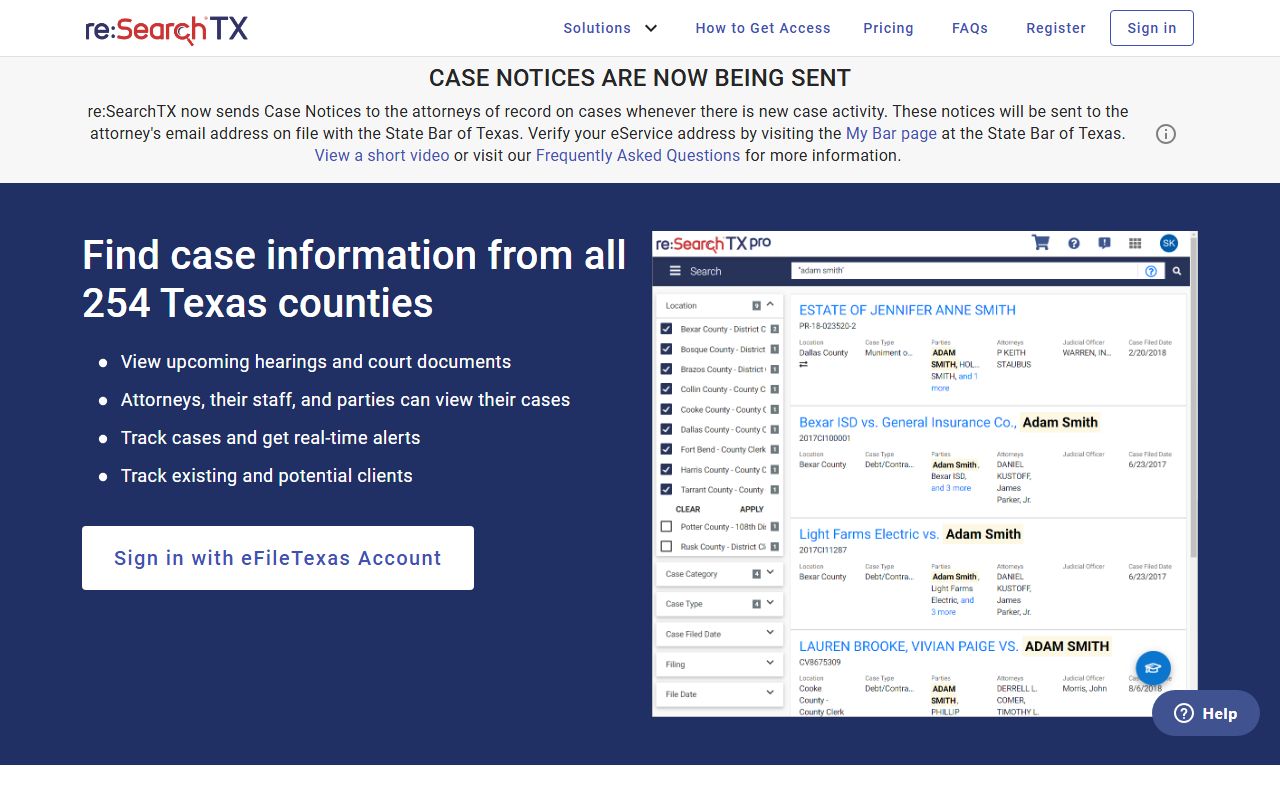
When the portal does not show the needed Baylor County case, the clerk remains the direct local fallback.
Arrest Charges and Filed Documents
Charging documents give the court record its formal shape. The exact route depends on the charge level and prosecutor action. The names below should not be treated as proof of guilt. They identify how an accusation reaches the court record after arrest.
| Document | What It Is | Baylor County Use Point |
|---|---|---|
| Complaint | A sworn allegation often used at early misdemeanor or preliminary stages. | May begin the court process after arrest or support early proceedings. |
| Information | A prosecutor-filed charging paper used for many non-indicted criminal cases. | Shows what the prosecutor chose to file, which may differ from booking language. |
| Indictment | A grand-jury charging instrument used for many felony prosecutions. | Can replace early charge descriptions with formal felony allegations. |
Baylor County Charge Status
Charge status is one reason court records after an arrest matter. A booking charge can be a starting label. The court record shows whether the charge is pending, changed, dismissed, resolved, or restricted from public view. A person can be arrested and still never be convicted of the original charge.
| Status | Meaning |
|---|---|
| Pending | The case is open and no final disposition appears. |
| Amended | The prosecutor changed the charge language or level. |
| Reduced | A lesser charge replaced or resolved the original allegation. |
| Dismissed | The charge was dropped by court or prosecutor action. |
| Acquitted | A not-guilty finding was entered. |
| Convicted | A guilty plea, verdict, or finding resulted in judgment. |
| Deferred adjudication | The court deferred a finding while supervision conditions are completed. |
Bond Warrants and Holds
After an arrest, Texas Code of Criminal Procedure Article 15.17 governs the magistrate warning and early rights and bail process. Article 17.15 sets rules for fixing bail. Baylor County did not publish detailed local bond-desk hours or payment instructions in the sources reviewed, so confirm bond, holds, payment location, and receiving jail before paying anyone.
| Bond or Hold | How It Affects the Case |
|---|---|
| Cash bond | Money is paid under local court or jail procedure to secure appearance. |
| Surety bond | A licensed bail bond surety posts bond for a fee. |
| Personal bond | Release is based on promise to appear, often with conditions. |
| No-bond hold | Release is not available until a court or agency clears the hold. |
| Detainer | Another agency, such as ICE, parole, another county, or federal authorities, may want custody. |
No official Baylor County active warrant search, sheriff warrant list, most-wanted page, or searchable warrant portal was located. Use the sheriff, clerk, JP court, Seymour channels, or re:SearchTX when a warrant is tied to a filed case.
Charges Versus Convictions
A court record after arrest may contain accusations, settings, motions, warrants, bond orders, and dispositions. Only a conviction means a guilty plea, verdict, or judgment was entered. The Texas DPS conviction-name search is conviction-oriented and is not a substitute for checking a pending Baylor County docket with the clerk.
| Question | Charge | Conviction |
|---|---|---|
| What it means | An allegation filed or listed in court. | A final judgment or finding of guilt. |
| Where it appears | Booking notes, complaints, informations, indictments, docket entries. | Judgment, sentence, DPS conviction history where eligible. |
| Can it change? | Yes, it may be amended, reduced, or dismissed. | Changes usually require appeal, post-conviction relief, or later court action. |
The DPS conviction portal is useful when the question is statewide conviction history.
Texas DPS publishes a conviction-name search portal for conviction-oriented searches.
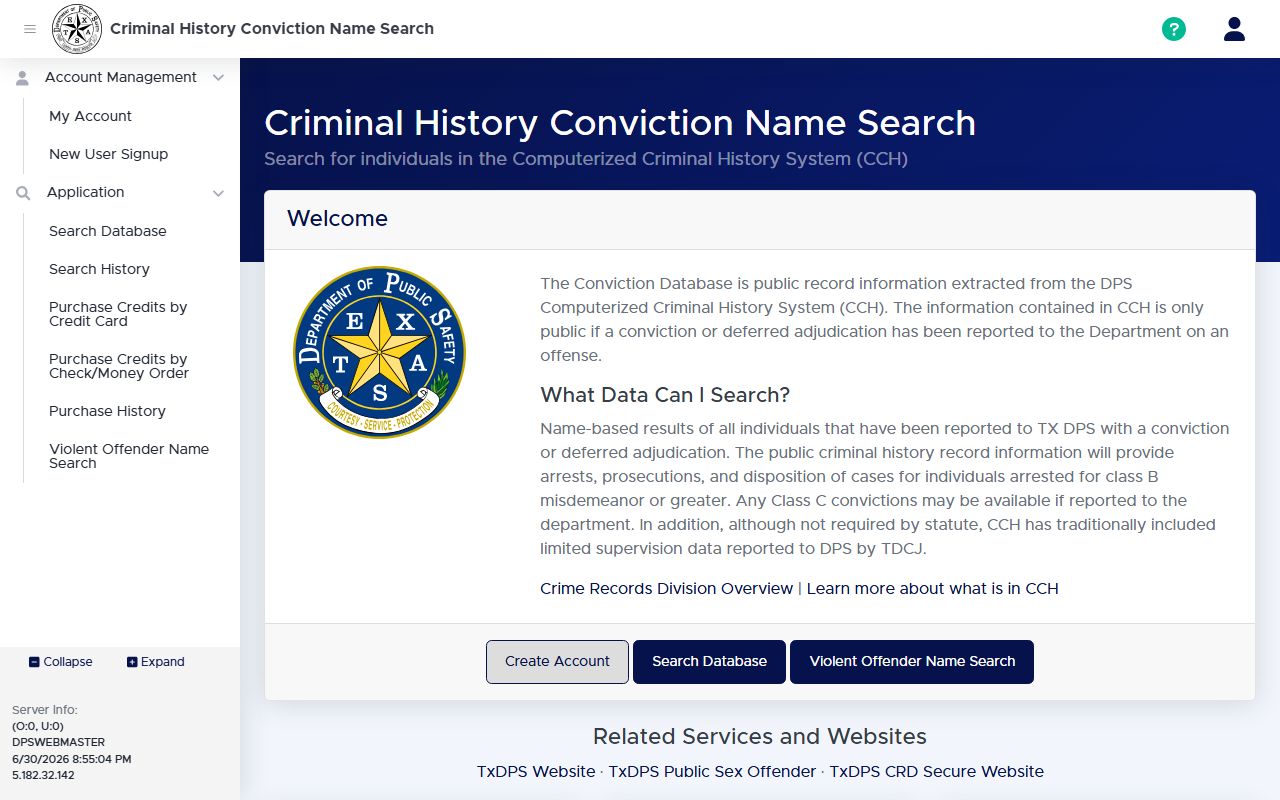
Use the Baylor clerk for local pending case records that are not final convictions.
Sealed Expunged Court Records
Texas Code of Criminal Procedure Chapter 55 and Article 55.01 set expunction eligibility rules for certain arrests and records. Expunction is different from nondisclosure or sealing. Expunction can destroy or remove eligible records from public access. Nondisclosure restricts public access but does not necessarily erase every government record.
| Record Limit | What It Does | Common Baylor County Route |
|---|---|---|
| Expunction | Can remove eligible arrest records through a court order. | Use court process and clerk records; legal advice may be needed. |
| Nondisclosure or sealing | Restricts public access to eligible records. | Check court orders and clerk handling. |
| Juvenile or protected records | May be withheld from public release. | Agency or court applies privacy rules. |
| Active investigation exception | May limit release while an investigation or prosecution is active. | Records custodian applies Texas law exceptions. |
Important: This site is not a consumer reporting agency and court or custody information must not be used for FCRA-covered screening.